CutRoom
AUTOMATIC VIDEO EDITING
Point it at a folder of clips and a one-line brief. It analyses every shot, builds an edit, and hands you the timeline — with the reason behind every cut and the alternatives it rejected.
Most attempts at AI video editing let the model drive the renderer. CutRoom splits them like a compiler: the model is the front end producing intent, FFmpeg-backed tools are the back end producing frames, and a validated IR sits between them as the contract.
That split buys incremental rendering — change one part of a plan and only that part re-renders, because IR nodes are content-addressed.
Before writing any of the real code I retired all four architectural risks with throwaway spikes: could the IR express diverse videos, could rendering actually be incremental, could analyse-once retrieval work, and could a local model plan through the full spine. All four came back yes, in writing.
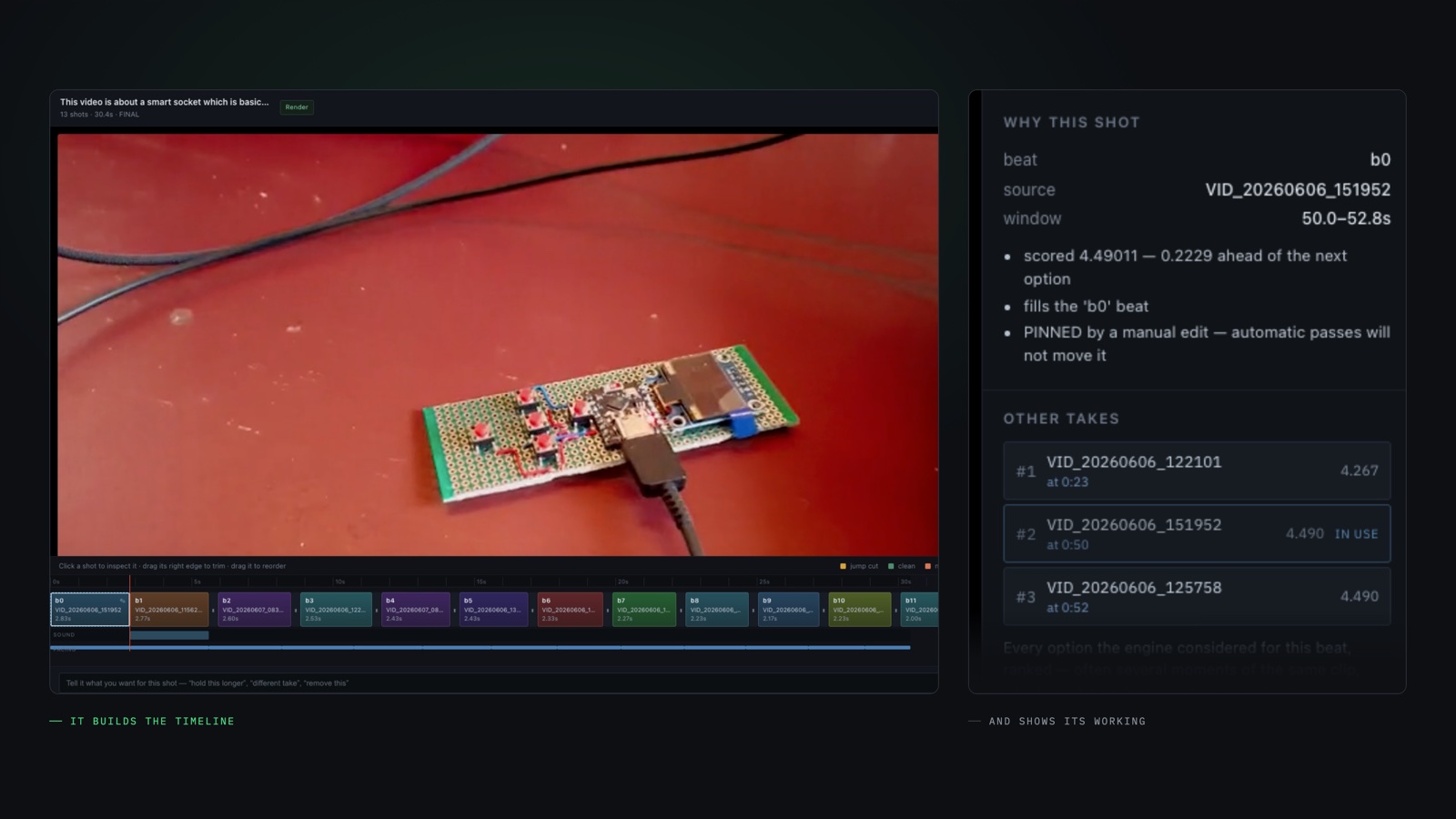
None of that would matter if you could not argue with it. Select any shot and the editor tells you which beat it fills, what it scored, and every alternative it ranked and passed over — often several moments of the same clip — so you can swap one in without the engine re-guessing everything around it. It flags its own weak cuts, and you refine a section by describing what you want rather than dragging frames.
STACK, BY LAYER
- 01 PRODUCT Timeline editor · shot inspector · natural-language refinement
- 02 SERVICE Render backend interface · FFmpeg backend · cache
- 03 DATA Content-addressed IR · analysis graph · hybrid retrieval
- 04 MODELS Qwen3 35B planning · Qwen2.5VL vision · nomic embeddings via Ollama
- 05 PROTOCOL —
- 06 FIRMWARE —
- 07 SILICON —